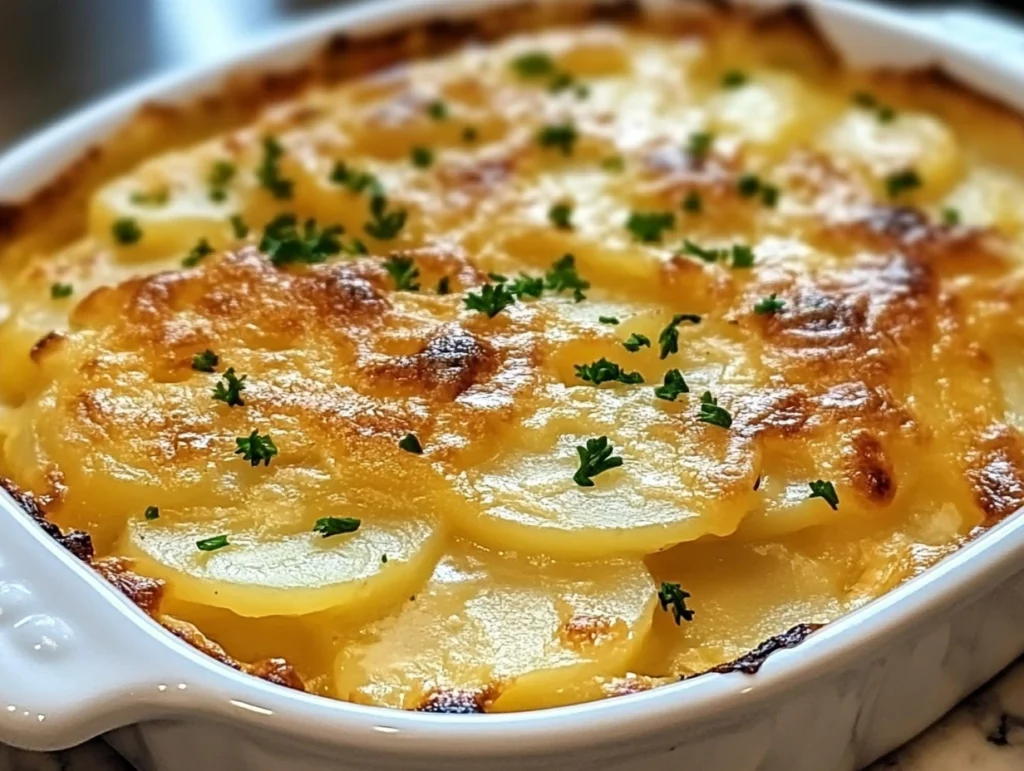
There’s something undeniably comforting about a bubbly, cheese-laden dish emerging from the oven, its golden top whispering promises of creamy goodness beneath. Scalloped potatoes hold a special place in my heart—perhaps because they were the star alongside my grandma’s roast chicken every Sunday afternoon. I vividly remember sneaking into the kitchen as a kid, drawn by the sweet aroma of melting butter and garlic dancing through the air. Today, I’m thrilled to share my go-to version: thinly sliced russets (you can swap in Yukon Golds if you prefer a silkier texture) bathed in a rich, cheddar-and-Gruyère sauce that’s seasoned just right. Whether you’re hosting a holiday feast or craving cozy comfort food, these scalloped potatoes never disappoint.
In true I Am Baker fashion, I love adding little touches that make the process feel more like a mini kitchen adventure than a chore. Over the years, I’ve experimented with swapping in leeks for onions, sneaking in a teaspoon of Dijon mustard for a subtle tang, and yes, even stirring in some crispy bacon for a playful twist. But for today’s recipe, we’ll stick close to the classic: a dreamy, velvety sauce enveloping layers of perfectly tender potatoes. You’ll need just a handful of pantry staples—flour, milk, cream, garlic, and, of course, good cheese. Once you get the hang of the basic steps, feel free to let your creativity run wild. Ready to dive in? Let’s lace up our aprons and get started.

STEPS
Prep Your Oven and Dish
Preheat your oven to 375°F (190°C). While it’s warming up, grab a 3-quart baking dish and give it a generous butter rub. This little step ensures the potatoes slide out effortlessly after baking—and it’s one less sticky situation to manage later.Sauté Onions and Garlic
Place a medium saucepan over medium heat and melt 3 tablespoons of unsalted butter. Add one finely chopped yellow onion and sauté, stirring occasionally, until it’s soft and translucent—about 5 minutes. As the edges just begin to turn golden, stir in 2 minced garlic cloves and cook for an additional 30 seconds. The goal here is to coax out the garlic’s fragrance without letting it scorch.Build a Silky Roux
Sprinkle 3 tablespoons of all-purpose flour over the onion–garlic mixture. Whisk constantly for 1 full minute to cook off that raw flour taste. You’ll notice the mixture becoming paste-like—that’s your roux, the magic base that thickens our sauce into something silky and luxurious.Whisk in Dairy
Slowly pour in 2 cups of whole milk and 1 cup of heavy cream, whisking continuously to prevent any lumps from forming. As soon as the mixture is smooth, bring it to a gentle simmer. Keep whisking until the sauce coats the back of a spoon—this usually takes about 3–4 minutes. Once thickened, remove the pan from heat and stir in 1 teaspoon of kosher salt, ½ teaspoon of freshly ground black pepper, and an optional pinch (⅛ teaspoon) of freshly grated nutmeg for warmth.Melt in the Cheese
Stir in 1 cup of shredded sharp cheddar (or Gruyère, if you’re feeling fancy) until completely melted and silky. Give it a taste test—if you like things a tad sharper, feel free to add a handful more cheese or a dash of mustard for depth.
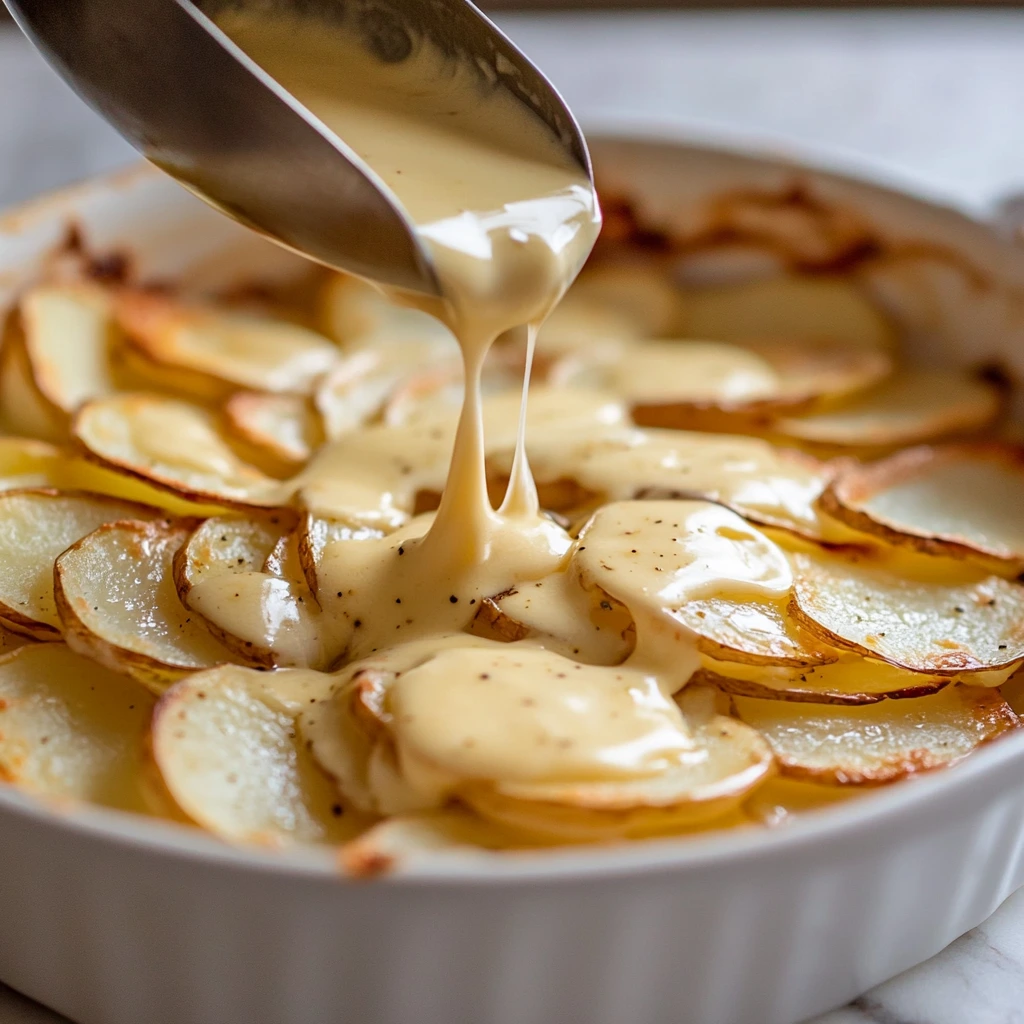
Now that you’ve whipped up that dreamy cheese sauce, it’s time for the fun part—layering those tender potato slices and transforming them into a bubbling casserole of pure comfort. Think of it as building a savory lasagna, but with potatoes doing all the heavy lifting. I’ve learned a few tricks over the years to keep the layers even, prevent the dreaded dry edges, and coax out maximum flavor. Let’s dive right in.
STEPS
Layer the First Potato Round
Take half of your 2½ pounds of ⅛-inch-thick potato slices and arrange them in an even layer in your buttered 3-quart dish. Don’t worry if they overlap slightly—that’s actually what helps every bite stay creamy.Add the Sauce
Spoon half of your cheese sauce over this first layer. Use the back of a spoon to gently coax the sauce into every nook and cranny. This step is crucial: you want each potato to be fully coated so that no dry bits sneak through.Repeat the Process
Layer the remaining potato slices on top, then pour over the rest of your sauce. Again, press the potatoes ever so gently with the back of the spoon to encourage them to settle into the sauce. This little “plumping” trick helps everything cook evenly.Top with Extra Cheese
Scatter the remaining ½ cup of shredded cheddar (or Gruyère) across the top. This final cheesy crown will melt and brown during baking, giving you that irresistible golden crust.Cover and Bake
Tightly cover the dish with aluminum foil. This seals in steam, ensuring the potatoes become fork-tender without drying out. Slide the dish into your preheated 375°F oven and bake for 35 minutes.Uncover for Browning
After 35 minutes, remove the foil and bake for an additional 20–25 minutes, or until a knife glides easily through the potatoes and the top is gloriously golden. If you’re a browning enthusiast, switch your oven to Broil on High for 2–3 minutes—just keep a watchful eye so it doesn’t tip into “charred” territory.Rest Before Serving
Let the scalloped potatoes rest for at least 10 minutes once they come out of the oven. This brief pause allows the creamy sauce to thicken slightly, making slicing and serving a breeze.
Expert Tips & Variations
Onion Swaps and Flavor Boosters
I sometimes trade half the yellow onion for thinly sliced leeks to add subtle sweetness. For a gentle tang, whisk in 1 teaspoon of Dijon mustard when you finish your roux. It cuts through the richness in the most delightful way.Meaty Upgrades
Feeling indulgent? Stir 4 ounces of cooked, crumbled bacon or diced ham into the sauce before layering. The salty punch of bacon or the heartiness of ham turns this side into a show-stopping main for your next brunch.Cheese Exploration
Sharp cheddar and Gruyère play beautifully together, but don’t be afraid to experiment. A handful of fontina or Monterey Jack adds extra gooeyness, while a sprinkle of Parmesan on top gives a nutty, crisp finish.Make-Ahead Magic
You can assemble the casserole the night before, cover it, and refrigerate. When you’re ready to bake, let it sit at room temperature for 30 minutes, then proceed with the covered baking (you may need an extra 5–10 minutes under foil).Leftover Revival
Leftovers are daytime heroes—store them in an airtight container for up to 3 days. Reheat covered at 350°F until warmed through (about 15–20 minutes) or crisp the top under the broiler for that just-baked charm.
Frequently Asked Questions
Q1: Can I freeze scalloped potatoes?
Absolutely! Once the casserole has cooled completely, wrap it tightly in aluminum foil or transfer to an airtight, freezer-safe container. Freeze for up to 2 months. When you’re ready to bake, thaw overnight in the fridge, then bake at 375°F, covered, for 40–45 minutes, uncovering the last 15 minutes to brown the top.
Q2: What’s the best potato variety to use?
Russets are my go-to for classic scalloped potatoes—their high starch content makes for ultra-creamy layers. Yukon Golds work beautifully, too, yielding a slightly waxier texture and more buttery flavor. Just avoid super-waxy potatoes (like red potatoes), which can stay too firm.
Q3: My sauce seems too thin—what did I do wrong?
A thin sauce usually means the roux didn’t cook or the mixture didn’t simmer long enough. Next time, ensure you whisk the flour in for a full minute before adding liquid, then bring to a gentle simmer until it coats the spoon (about 3–4 minutes). If you’re already in the layering stage, a quick fix is stirring in an extra tablespoon of flour or a handful of cheese to help thicken.
Q4: Can I make this dairy-free or lighter?
You can substitute half-and-half for the milk and cream to reduce richness, though the sauce will be lighter. For a dairy-free version, use unsweetened oat or cashew milk and dairy-free butter, then stir in a plant-based “cheese” that melts well. Keep in mind the flavor and texture will be different—still tasty, but not quite the classic decadence.
Q5: How do I know when the potatoes are fully cooked?
The telltale sign is when a sharp knife or skewer slides through the layers with almost no resistance. If you meet a firm center, cover and bake another 5–10 minutes. Remember to let the dish rest 10 minutes after baking; the sauce firms up and the potatoes finish cooking gently in residual heat.
Q6: Any tips for making this ahead for a crowd?
Yes—assemble the dish up to the end of Step 4, cover tightly, and refrigerate overnight. On the day of your event, let it sit at room temperature for 30 minutes, then bake as directed, adding 5–10 minutes under foil. Uncover and brown as usual.
Conclusion
There you have it—everything you need to master the art of scalloped potatoes, from foolproof sauce-making to handy storage hacks and delightful variations. Whether you stick to the classic cheddar-and-cream approach or get adventurous with bacon, leeks, or dairy-free twists, these layers of tender potatoes and rich sauce never fail to comfort. I guarantee your family and friends will be elbowing each other for seconds.
Now it’s your turn: preheat that oven, grab your favorite cheese, and let the aromas fill your kitchen. Don’t be shy—share your tweaks in the comments below. Did you swap in Gruyère or sneak in some spinach? I’d love to hear how you made this recipe your own. Happy baking!
Print
Best Scalloped Potatoes
- Author: Andrew Recipes
Description
Thinly sliced potatoes baked in a rich, creamy cheese sauce until tender and golden on top. This classic side dish is perfect for special occasions or a cozy family dinner.
Ingredients
– 2½ pounds russet or Yukon Gold potatoes, peeled and sliced ⅛-inch thick
– 3 tablespoons unsalted butter
– 1 medium yellow onion, finely chopped
– 2 garlic cloves, minced
– 3 tablespoons all-purpose flour
– 2 cups whole milk
– 1 cup heavy cream
– 1 teaspoon kosher salt
– ½ teaspoon freshly ground black pepper
– ⅛ teaspoon freshly grated nutmeg (optional)
– 1½ cups shredded sharp cheddar (or Gruyère)
– 2 tablespoons chopped fresh parsley (optional, for garnish)
Instructions
1️⃣ Preheat the oven to 375°F. Butter a 3-quart baking dish and set aside.
2️⃣ In a medium saucepan over medium heat melt the butter. Add the chopped onion and cook, stirring, until softened and translucent, about 5 minutes. Stir in the garlic and cook 30 seconds more.
3️⃣ Sprinkle the flour over the onion mixture and whisk constantly for 1 minute to form a roux. Gradually pour in the milk and cream, whisking constantly to avoid lumps.
4️⃣ Bring the sauce to a gentle simmer, whisk until thickened enough to coat the back of a spoon, about 3–4 minutes. Season with salt, pepper and nutmeg. Remove from heat and stir in 1 cup of the cheese until melted.
5️⃣ Arrange half of the potato slices in an even layer in the prepared dish. Pour half of the cheese sauce over the potatoes, smoothing with the back of a spoon.
6️⃣ Layer the remaining potato slices on top and pour over the rest of the sauce. Press the potatoes gently so they’re submerged. Scatter the remaining ½ cup cheese on top.
7️⃣ Cover the dish tightly with foil and bake for 35 minutes. Remove the foil and continue baking until the potatoes are tender when pierced with a knife and the top is golden brown, about 20–25 minutes more.
8️⃣ Let stand 10 minutes before serving so the sauce sets slightly. Garnish with chopped parsley if desired.
Notes
Leftovers can be stored in an airtight container in the refrigerator for up to 3 days and reheated covered in a 350°F oven until warmed through.
For extra depth of flavor, swap half the onions for thinly sliced leeks or stir in 1 teaspoon Dijon mustard to the sauce.
Feel free to mix in 4 ounces cooked bacon or diced ham with the potato layers for a heartier dish.
If you prefer a crustier top, broil on High for 2–3 minutes after uncovering, watching closely to avoid burning.